Some windows are too good to cover. The view is the reason you love the room, but by mid-afternoon the sun is in your eyes, on your screen, and heating up the sofa. That’s the job a solar shade was made for.
What a solar shade does
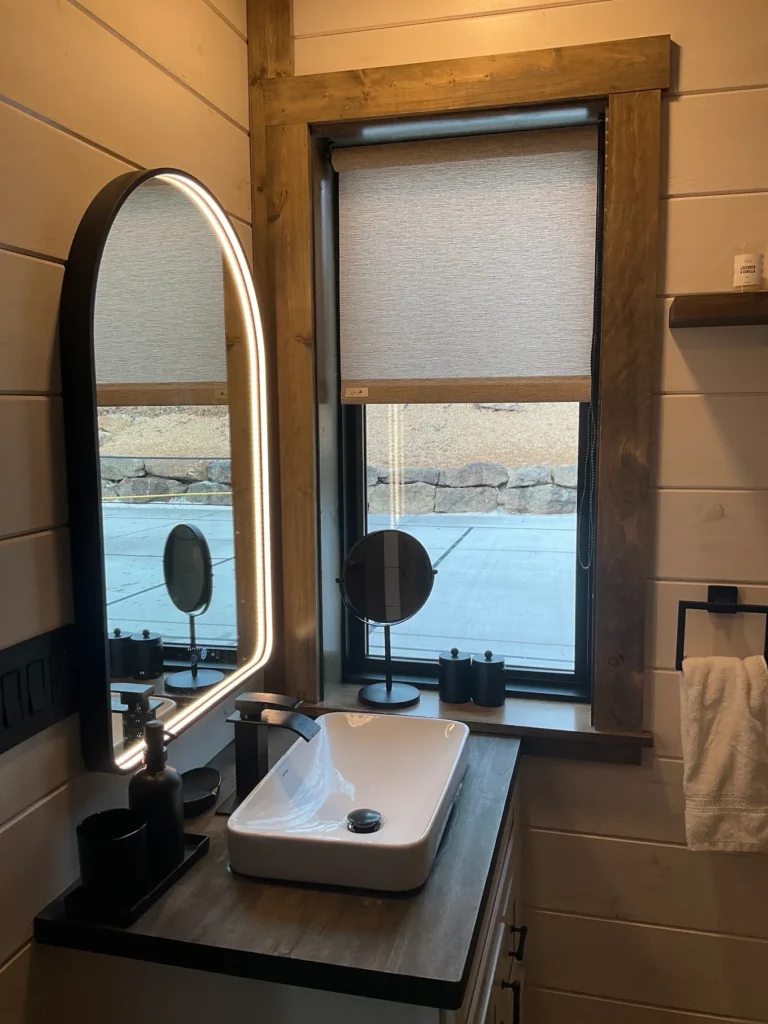
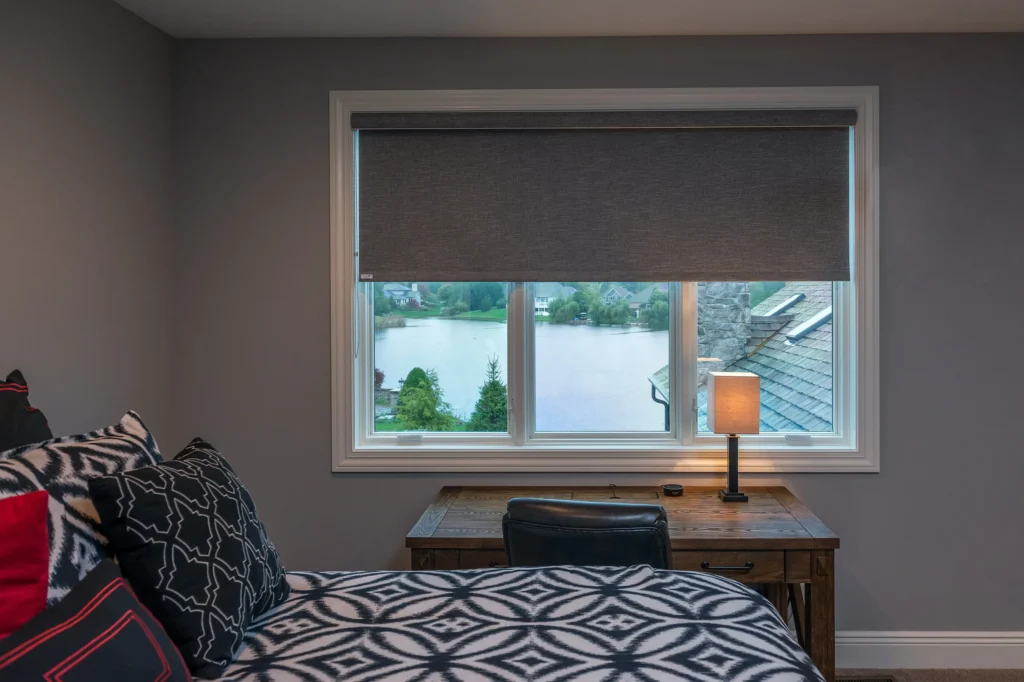
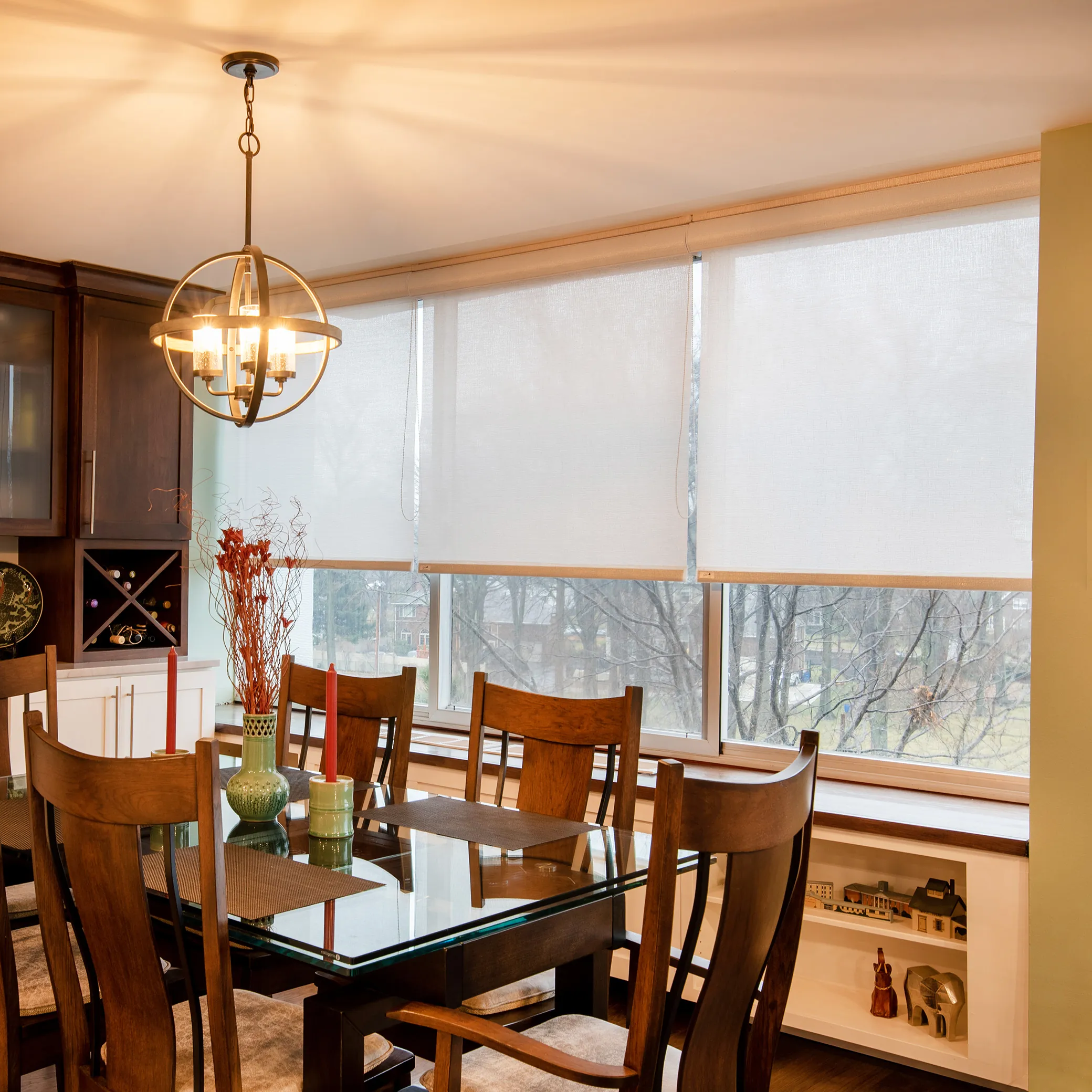
Solar fabric is a fine, open weave that works a lot like a window screen. It takes the harsh edge off direct sun and cuts glare, heat, and UV at the glass, while you still see the yard, the lake, or the street outside. The room stays bright. It just stops being blinding.
Many brands sell solar fabric in several “openness” levels, which leaves you comparing percentages. We keep it simple: we carry one solar fabric, so there’s no percentage to pick. You choose the color and the options, and we build it to your window.
Where solar shades work best
- West- and south-facing windows: where the afternoon sun is lowest and strongest, and the heat builds up fastest.
- Kitchens and dining rooms: cut the glare off counters and the table without shutting out the backyard.
- Living rooms with a view: keep the lake, the field, or the garden in the picture.
- Home offices: take the glare off a monitor without working in the dark.
- Sunrooms: rooms that are mostly glass, where you want the light but not the heat.
| Feature | Solar | Light filtering |
|---|---|---|
| View outside | Kept, like looking through a screen | Soft light, view mostly hidden |
| Glare and harsh sun | Cut down at the glass | Diffused into a soft glow |
| Privacy after dark | See-through with lights on | Private |
| Best for | Kitchens, sunrooms, rooms with a view | Living rooms and spaces that need privacy |
The one thing to know: night privacy
During the day, the bright side is outside, so you see out easily. After dark it flips. With the lights on inside, a solar shade is see-through, just like a screen, and people outside can see in.
That’s not a flaw. It just means solar belongs in the right rooms. Use it where the view matters and night privacy doesn’t: kitchens, sunrooms, and living spaces that face the backyard. For bedrooms and bathrooms, choose light filtering or blackout. Plenty of homes use solar in the main rooms and something more private down the hall.
Keep the view, lose the glare.
Choosing a color
Color changes how a solar shade looks from inside as much as how it looks from the street. As a rule of thumb, darker colors make the view outside look clearer and do the most to cut glare, because the fabric itself fades into the background. Lighter colors blend in with white trim and light walls, and look brighter from outside.
The best way to decide is to see it at your own window, in your own light. Order free samples and hold them up in the afternoon, when the sun is doing its worst.
Hard-to-reach windows? Go motorized
Solar shades often go on the biggest windows in the house, which are usually the hardest to reach. Motorization is available on shades 19 inches wide and up, and one remote runs up to 15 shades, so a whole wall of glass can move together. There are no cords or chains to reach for.
The short answer
If you want to cut glare and heat but keep the view, and the room doesn’t need privacy at night, choose solar. Every solar shade is cut to your measurements and built by hand in our Millersburg, Ohio workroom, and it’s backed by a 10-year warranty. Not sure which line fits which room? Call us at (330) 674-2590, or see how to measure and get started.